The latest Honeywell 2024 USB Threat Report has drawn attention to a critical issue in cybersecurity: the rise of targeted and highly disruptive USB-borne malware. What makes this particularly concerning is not just the growth in volume but the shift toward attacks that are engineered to damage operational technology (OT) environments as much as traditional IT networks. Flash drives, often overlooked as a basic tool for file transfers or updates, are increasingly being exploited as vFlash Drivesehicles for sophisticated cyber threats.
For businesses that depend on manufacturing plants, industrial systems, and factory floor automation, this means a new level of vulnerability. A single compromised flash drive can deliver malicious code capable of halting operations, corrupting systems, or even disabling critical safety mechanisms. As industries continue to bridge IT and OT networks, the stakes are higher than ever.
Why Flash Drives Have Become a Prime Target
Flash drives offer convenience and portability, but those very features make them an appealing tool for attackers. Unlike cloud-based file transfers, flash drives require physical connection, which can bypass many traditional perimeter defenses. Malware introduced this way is harder to detect and can spread rapidly once connected to machines across a network.
Honeywell�s report reveals a concerning rise in malware targeting OT systems. These attacks are not limited to stealing data but are aimed at causing disruption, creating downtime, and even inflicting permanent damage on physical infrastructure. The clear takeaway is that organizations must enhance their defenses against risks carried through USB devices.
Key Defensive Layers Every Organization Needs
Protecting against flash drive�based attacks requires a layered approach. No single control is enough; instead, companies need a strategy that includes proactive, preventative, and reactive measures. Let�s break down an actionable control stack that organizations can apply today.
- Allow-Listed Media Only
- Dedicated Kiosk Scanning
- Port Locks for Physical Protection
- Robust Key Management
One of the most effective ways to reduce risk is by implementing strict allow-listing policies. This ensures that only authorized flash drives, pre-approved for use, can connect to systems. Unauthorized devices are automatically blocked, preventing unknown malware from entering the environment. This not only safeguards IT systems but also limits exposure across OT equipment.
Before any removable media is permitted into a secure environment, it should be scanned at a dedicated kiosk. These kiosks act as checkpoints, analyzing flash drives for malicious content before they are cleared for use. By moving scanning out of the operational environment and into a controlled space, businesses reduce the chance of malware slipping through unnoticed.
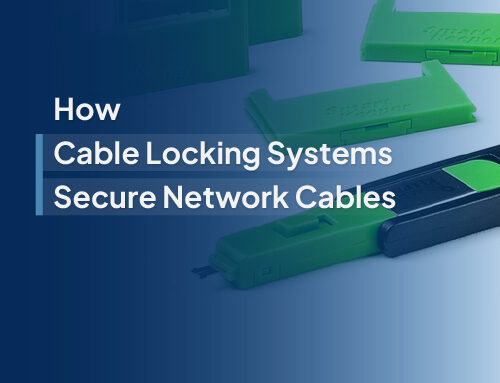
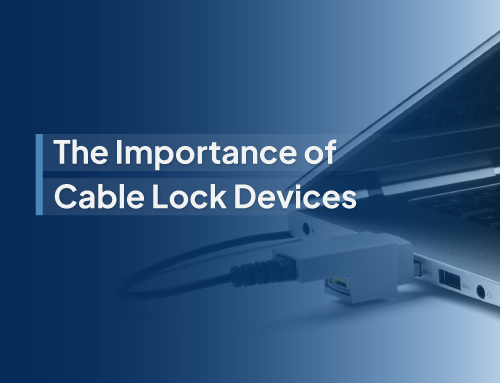
Even the strongest digital safeguards can be undermined if ports remain wide open. Port locks provide a physical barrier, ensuring that only authorized users with the right keys can connect devices. This simple but effective step minimizes insider threats and prevents unauthorized flash drive use on critical systems.
Securing port locks and other physical security measures requires strong key management. Without proper oversight, lost or duplicated keys can compromise the entire defense system. Centralized key management ensures accountability, maintains control over who has access, and reduces the risk of misuse.
Bridging IT and OT: A Unified Front Against USB-Borne Threats
IT departments have long prioritized data protection, while OT environments focus on reliability and uptime. With the growing overlap between these domains, businesses must take a unified approach. Flash drives act as a bridge between IT and OT, making them a potential weak point if left unprotected.
The 2024 USB malware data emphasizes that security strategies cannot remain siloed. IT and OT teams need shared policies, coordinated defenses, and joint responsibility in protecting infrastructure. When aligned, both environments benefit from improved resilience against increasingly targeted attacks.
From Awareness to Action: Building Resilient Security Layers
Awareness of the risks is no longer enough. Cybercriminals are evolving faster than ever, and waiting for an incident to spark action could prove costly. The Honeywell report serves as a call to action for businesses across industries to modernize their control stacks and prioritize USB security as part of their larger cybersecurity strategy.
By implementing allow-listed media, kiosk scanning, port locks, and centralized key management, organizations build a strong foundation. Together, these measures not only safeguard against malware but also foster a culture of security that reaches across both IT and OT systems.
Securing Connections Today for a Safer Digital Tomorrow
Looking ahead, the importance of securing flash drives and related access points will only continue to grow. As digital transformation accelerates, factory floors, utilities, and other industrial systems will become even more interconnected. Each connection creates new opportunities for efficiency but also new vulnerabilities. By addressing USB-borne threats today, organizations position themselves to thrive in a more secure tomorrow.
Strengthening Cyber Defenses Against USB-Borne Threats
At Smart Keeper, we understand the urgent need for businesses to protect both IT and OT environments from USB-borne threats. That�s why we offer advanced solutions like port locks, key management systems, and access control tools designed to secure your organization against disruptive attacks. Our products are engineered to integrate seamlessly into existing operations, helping companies build a reliable, layered defense strategy that reduces risks without slowing productivity.
Secure your business from USB-borne threats today with Smart Keeper where strong protection meets simple control.