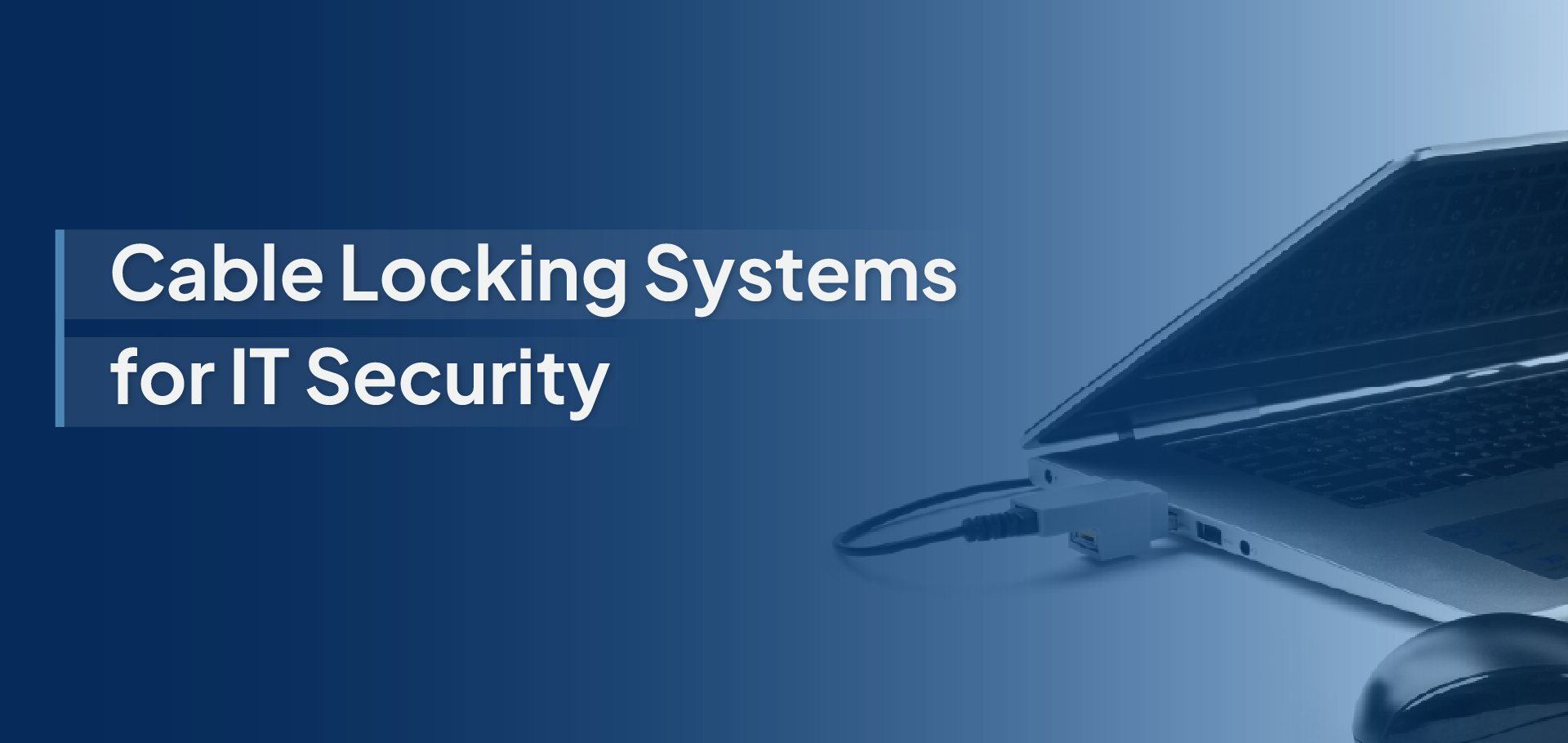
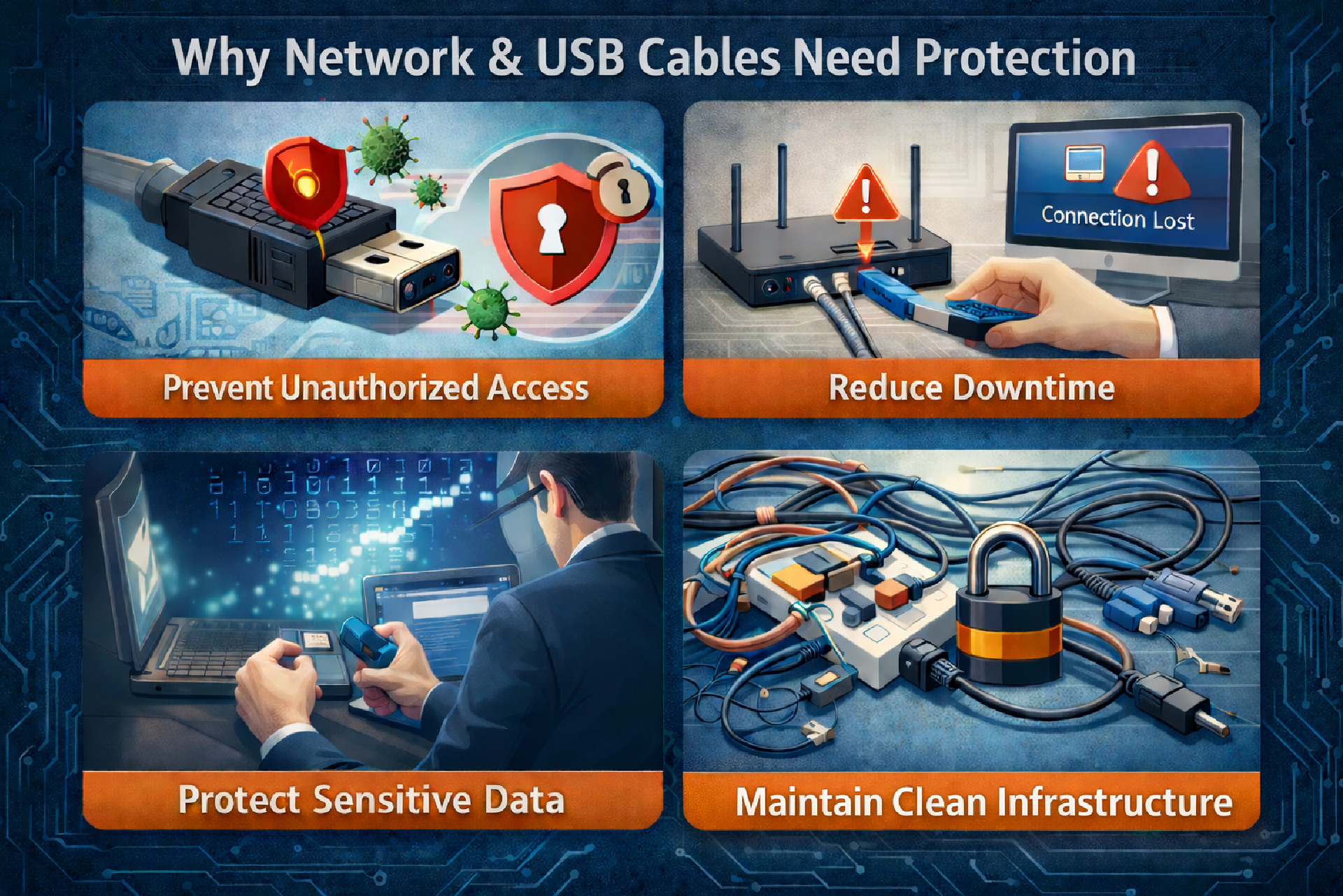
Cable Locking SystemsIn today’s workplaces, a single USB port or network cable can become a serious security gap. Unauthorised devices, accidental unplugging, and physical tampering don’t just disrupt operations; they expose systems to real risk.
While most organizations focus on software protection, physical cable security is often overlooked. Cable locking systems offer a simple but powerful way to secure USB and network connections, prevent downtime, and maintain control over critical infrastructure.
What Are Cable Locking Systems?
Cable locking systems are physical security solutions designed to secure network, USB, and other device connections by preventing unauthorized access, accidental unplugging, or tampering. Instead of relying on software controls, these systems add a protective layer at the hardware level, keeping critical cables firmly connected and unused ports safely blocked.
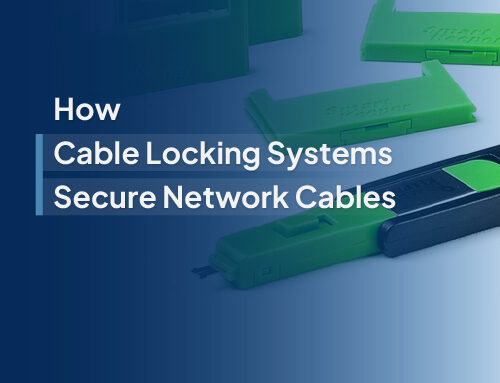
Typically, cable locking systems use small mechanical locks, retention clips, or port blockers that can only be removed with a specialized key or tool. This ensures that only authorized IT personnel can disconnect cables or enable access to specific ports.
Cable Locking Systems for IT Security
Types of Cable Locking Systems-
Different environments require different levels of protection, which is why cable locking systems come in multiple formats. Below is a clear comparison of the most commonly used solutions and how they help secure modern workplaces.
USB Port Locks & USB Cable Locks
USB ports are among the biggest physical security risks in offices because they enable quick access to external devices. USB locking systems are designed to either block unused ports or secure cables that must remain connected.
Blocking Unused Ports: USB port locks physically seal open ports to prevent unauthorized USB drives, keyboards, or storage devices from being plugged in. This reduces the risk of malware injection, data theft, or policy violations, especially in shared workstations or public-facing systems.
Securing Active USB Connections: USB cable locks hold approved devices like keyboards, webcams, or docking stations firmly in place. This helps prevent accidental removal, protects essential peripherals, and maintains consistent device functionality.
Best suited for:
- Corporate offices
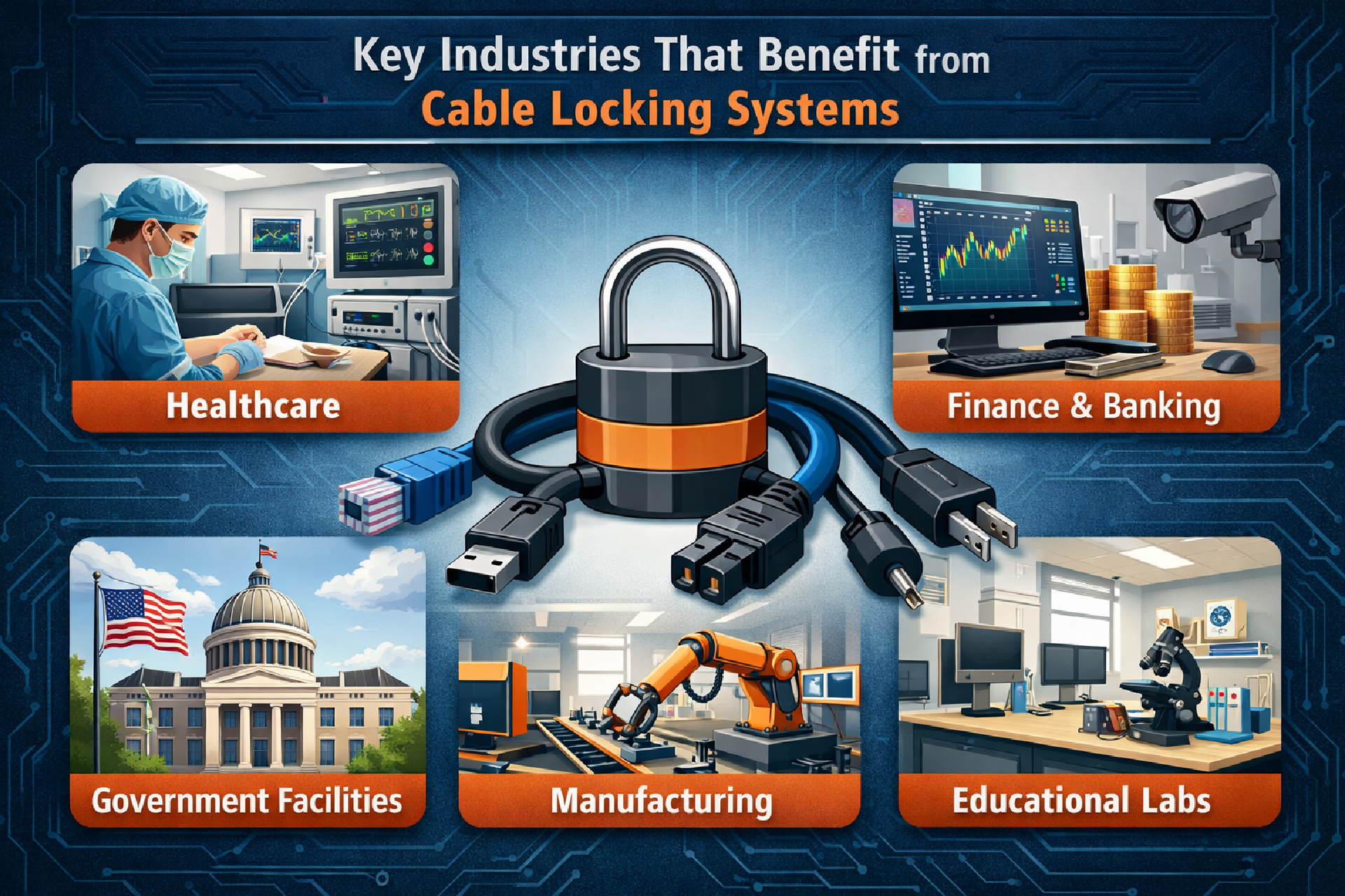
- Healthcare workstations
- Educational labs
- Public kiosks
RJ45 / Ethernet Cable Locks
Network cables are critical to daily operations, yet they’re often vulnerable to accidental unplugging or intentional tampering. RJ45 cable locks are designed to keep Ethernet connections secure without interfering with performance.
Network Integrity Protection: By locking Ethernet cables into place, organizations can maintain stable connectivity and avoid disruptions caused by loose or disconnected cables.
Preventing Accidental Unplugging: In busy environments like open offices or server rooms, cables can easily be pulled out during cleaning, maintenance, or equipment movement. Cable locks reduce downtime by ensuring connections remain intact.
Best suited for:
- Data centers and server racks
- Shared office desks
- Conference rooms
- Retail or industrial networks
HDMI / Display Cable Locks
Display cables in meeting rooms and digital signage setups are frequently moved or adjusted, increasing the chance of disconnections or equipment misuse. HDMI and display cable locking systems secure the visual infrastructure where reliability is essential.
Use Cases Include:
- AV setups in conference rooms
- Interactive displays in training spaces
- Digital signage and kiosks
- Control rooms and monitoring stations
These locks help maintain consistent presentations, prevent unauthorized device swaps, and reduce troubleshooting caused by loose display cables.
Power Cable Locking Systems
Power interruptions can instantly halt productivity, damage hardware, or corrupt data. Power cable locking systems are designed to keep power cords firmly connected to devices and outlets.
Prevent Power Interruptions: Whether it’s a desktop, server, or medical device, accidental disconnections can have serious consequences. Locking systems ensure that power cables stay securely attached, even in high-traffic environments.
Best suited for:
- Healthcare equipment
- Industrial machinery
- Workstations in shared spaces
- Server infrastructure
Universal Locking Keys & Management Systems
Managing multiple locks across an organization can become complex without a centralized system. Universal locking keys and management solutions simplify control by allowing authorized administrators to manage multiple devices using a standardized access method.
Admin-Controlled Access:
- Only designated IT personnel can unlock cables or ports
- Reduces risk of unauthorized changes
- Simplifies large-scale deployment across offices or facilities
These systems are especially valuable for enterprises that need scalable security while maintaining operational efficiency.
Together, these cable locking solutions create a layered approach to physical infrastructure protection, helping organizations secure connections, maintain uptime, and strengthen overall device security without disrupting everyday workflows.
Cable Locking Systems for IT Security
How to Choose the Right Cable Locking System?
Choosing the right cable locking system starts with understanding your environment and security needs. Begin by identifying which ports or cables require protection, whether it’s USB, Ethernet, display, or power connections. Consider how often the cables need to be accessed; high-use areas may benefit from easy-to-manage locking solutions, while sensitive environments may require stronger, restricted-access systems.
Compatibility is equally important. Ensure the locking system fits your existing hardware without affecting performance or usability. For larger setups, look for solutions with centralized key management or standardized locking mechanisms to simplify administration.
Ultimately, the right cable locking system should balance security, convenience, and scalability, helping you protect critical connections without disrupting everyday workflows.
Future Trends in Cable Security
As workplaces become more connected and device-driven, physical cable security is evolving beyond simple locking mechanisms. The rapid growth of USB-C ecosystems, hybrid work environments, and shared office setups is increasing the need for stronger control over who can access ports and connections. Organizations are also beginning to treat cable security as part of a larger zero-trust approach, combining physical safeguards with endpoint and network policies.
In the future, businesses can expect more standardized locking systems, smarter key management, and solutions designed to protect high-speed data and power connections without compromising performance. As IT infrastructure continues to expand, securing cables will play an even bigger role in maintaining uptime, compliance, and overall workplace security.
In a world where data security and operational stability are critical, even the smallest physical vulnerabilities can create significant risks. Unsecured USB ports, loose network cables, and exposed power connections can lead to downtime, unauthorized access, and costly disruptions. Cable locking systems offer a simple yet effective way to strengthen your physical security strategy, helping organizations maintain control, protect infrastructure, and keep essential systems running smoothly. As workplaces continue to evolve, combining digital security with reliable hardware protection is no longer optional; it’s essential.
Secure your connections with SmartKeeper.